

Guides
Why do I sleep through my alarm? A guide for heavy sleepers
What makes some people sleep through an alarm, what decades of smoke-alarm research say about sounds that wake people, and what to change tonight: the sound, the volume, the placement and the sleep itself.
By Daniel & Samuel Krucay, co-founders of Wakeletics
· 4 October 2026 · 8 min read
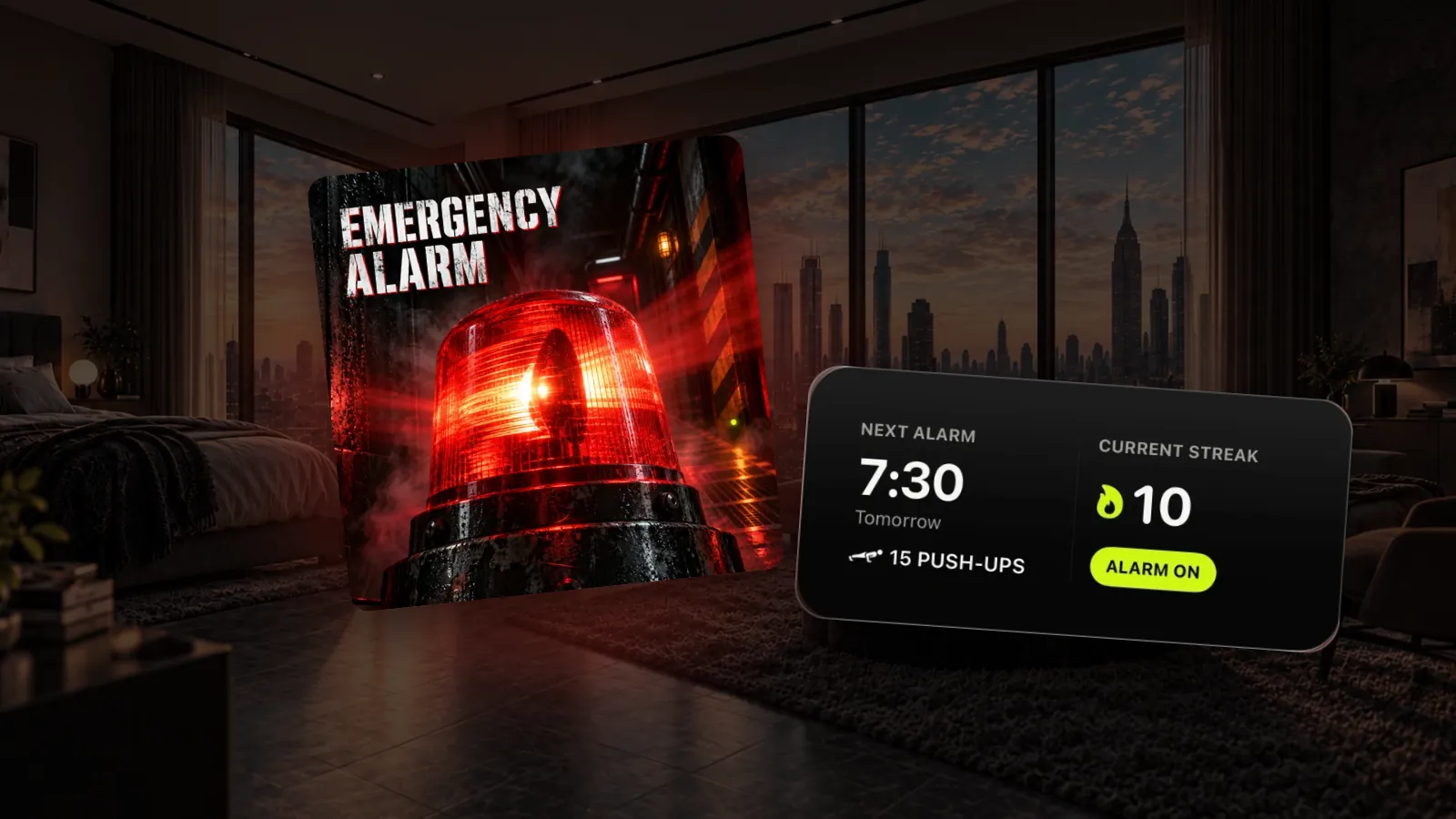
Some people wake at the first note of an alarm. Others sleep through a full minute of it, then the backup alarm, then someone shouting their name. If you're in the second group, you're not lazy and you're not imagining it. How easily people wake from sound varies a lot, and a few things you can change make a big difference.
First: did you not hear it, or did you switch it off?
These are two different problems.
- The alarm rang and rang, and nobody switched it off. That's what this guide is about.
- The alarm was switched off, and you don't remember doing it. That's a different problem with different fixes: read I turn off my alarm in my sleep.
If you're not sure, check your phone's alarm history, or ask whoever sleeps nearby.
What makes someone hard to wake
The best research on waking people with sound comes from an unexpected place: fire safety. People die in house fires despite working smoke alarms, so researchers have spent decades testing who wakes to an alarm and who doesn't. A 2007 review of that work listed the main reasons people stay asleep (Bruck & Ball, 2007):
- sleep deprivation
- alcohol
- sleeping pills
- a lot of background noise
- hearing loss
- simply being a heavy sleeper, which is a real and measurable difference between people
- being a child: children are harder to wake than adults
Most of those you can do something about. The first one is the most common.
Too little sleep
When you're short of sleep, your body tries to catch up, and the sleep you do get is deeper and harder to interrupt. If you regularly sleep through alarms during the week but wake easily on holiday, this is probably why. Adults need seven hours or more a night (Watson et al., 2015). No alarm sound fixes five.
Where in your sleep the alarm lands
How loud a sound needs to be to wake you changes across the night. It's highest in deep sleep, and lower in the lighter stages. Dreaming (REM) sleep is mixed: in a 2010 study, people were as easy to wake in the calmer parts of REM as in light sleep, but in the bursts of eye movement within REM they were as hard to wake as in deep sleep (Ermis et al., 2010). That's part of why the same alarm wakes you instantly one morning and not at all the next.
What the research says about the sound
To wake someone up: lower and buzzier beats high and thin
Smoke-alarm studies tested many signals on sleeping people and found the same thing again and again. A low-pitched, buzzy tone (a 520 Hz square wave, roughly the C above middle C, with a harsh edge) woke people more reliably than the classic high-pitched smoke-alarm beep.
In one study of adults with mild to moderate hearing loss, sleeping in deep sleep, the low tone woke 92% of them at the volume the standard requires for bedrooms (75 dBA). The usual high-pitched alarm woke 56% (Bruck & Thomas, 2009). In a separate study of 39 young adults, low-pitched square waves also needed the least volume to wake people (Bruck et al., 2009).
Two other results from the same work are worth knowing:
- Shaking works. Bed and pillow shakers woke 80 to 84% of the people with hearing loss.
- Light alone doesn't. Even bright strobe lights woke only 27%.
A phone isn't a smoke alarm, and these studies used special signals at measured volumes in a sleep lab. But the lesson is reasonable to borrow: if a thin, high beep isn't waking you, try a lower, fuller sound with more texture.
To wake up well: a melody may help
There's a second, separate question: how groggy you feel once you're awake. Here, a small body of research points the other way, towards melody. In a survey of 50 people, those whose alarm sound was melodic reported less grogginess after waking. In a follow-up experiment with ten people per group, a melodic alarm led to fewer lapses of attention on a reaction test than the control sound (McFarlane et al., 2020).
The same researchers' review of the evidence is careful: for adults woken suddenly, there isn't enough research to say which alarm type is best. So treat this as a promising lead, not a rule.
Putting both together: if you're sleeping through your alarm, choose a sound that gets through first. Once you're waking reliably, you can try something more melodic.
What to change tonight
1. Test your alarm
Set an alarm for one minute from now, put the phone where it sleeps, and stand at your pillow. Is it really loud there? Phones end up face-down, under pillows or on soft surfaces that muffle the speaker. Check the volume while you're at it.
2. Move the phone, not just the volume
Put the phone on a hard surface, speaker uncovered, in the open. Even better, put it across the room. You'll hear it more clearly, and to switch it off you'll have to get up.
3. Turn down the background noise
A fan, white noise or a busy street can cover an alarm. If you use white noise to sleep, try a timer that turns it off an hour before your alarm, or turn it down.
4. Change the sound
Pick a lower, fuller sound if a thin one isn't working. And if you've used the same sound for years and it has started to fade into the background, try a new one. No study has tested that for alarms, but it costs nothing to try.
5. Add a second sense
If sound alone isn't enough, vibration can help. A phone buzzing on a nightstand isn't a bed shaker, though. If you have hearing loss, a dedicated alarm with a bed or pillow shaker is the tested option. A light alone, as the strobe result shows, is a poor alarm, although morning light is still good for your body clock (Light sets your clock).
6. Look at the evening
Alcohol and some sleep medicines make waking much harder. If you've started a new medication and now sleep through alarms, mention it to your doctor rather than stopping it yourself.
When to talk to a doctor
See a doctor or a sleep clinic if:
- you sleep nine hours or more and still can't wake, or you're very sleepy during the day
- someone has noticed you stop breathing, gasp or snore heavily
- it started with a new medication
- you think your hearing has changed
Where Wakeletics fits, and where it doesn't
Wakeletics helps with what happens after the alarm gets your attention: it makes sure that hearing it turns into getting up.
- Choose the sound. Six free tones, from urgent (Earn It, Sprint) to gradual (Sunrise, Ascend). With Pro you also get the Pro Audio tracks, including Emergency Alarm, which is exactly what it sounds like, or you can record your own voice. Every sound loops until you're moving. More about the sounds.
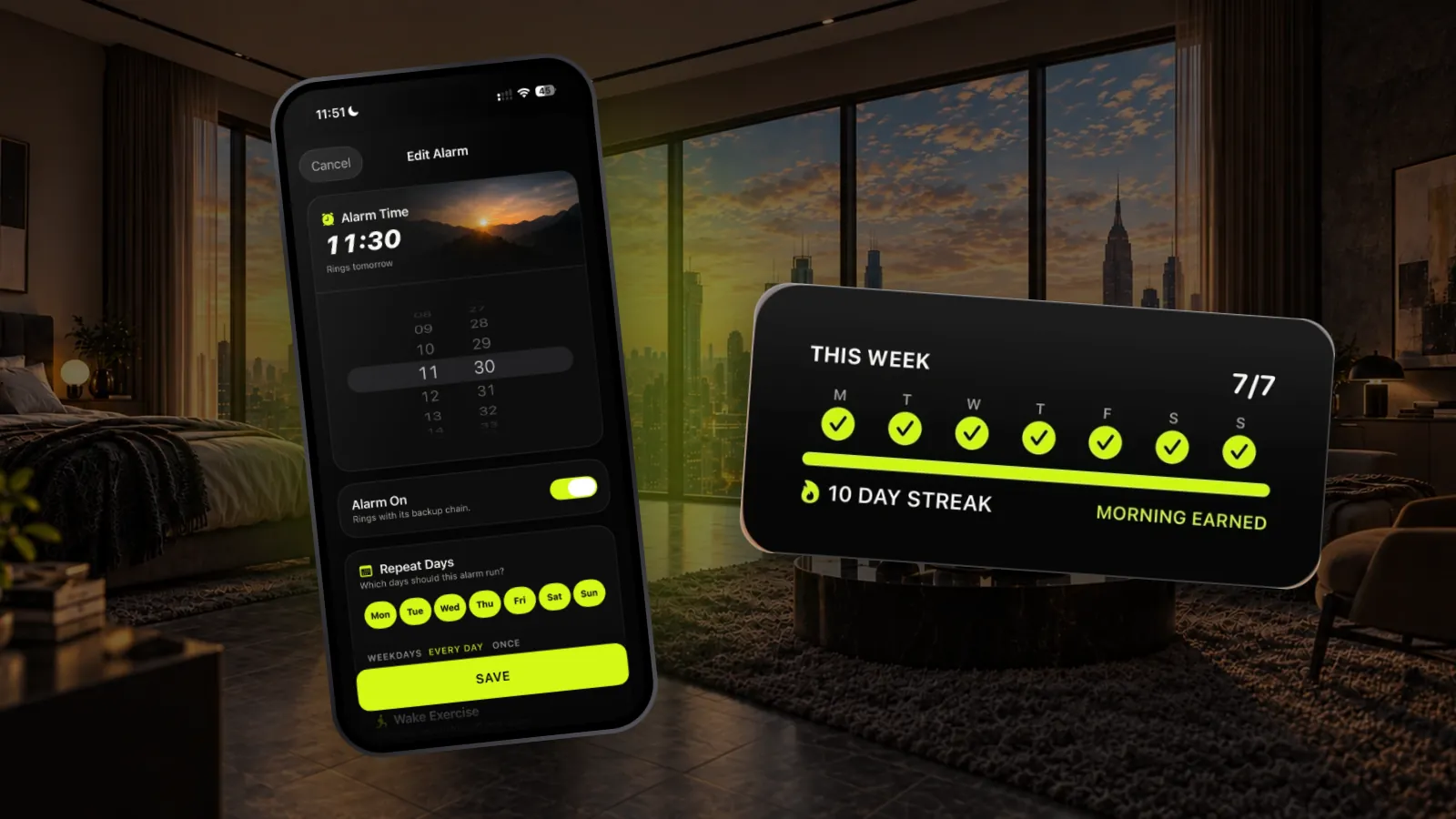
- Choose how persistent it is. Every alarm has backup rings: Gentle (2 over 5 minutes), Standard (4 over 15) or Relentless (6 over 25). All three are free. If you're a heavy sleeper, pair an urgent sound with Relentless.
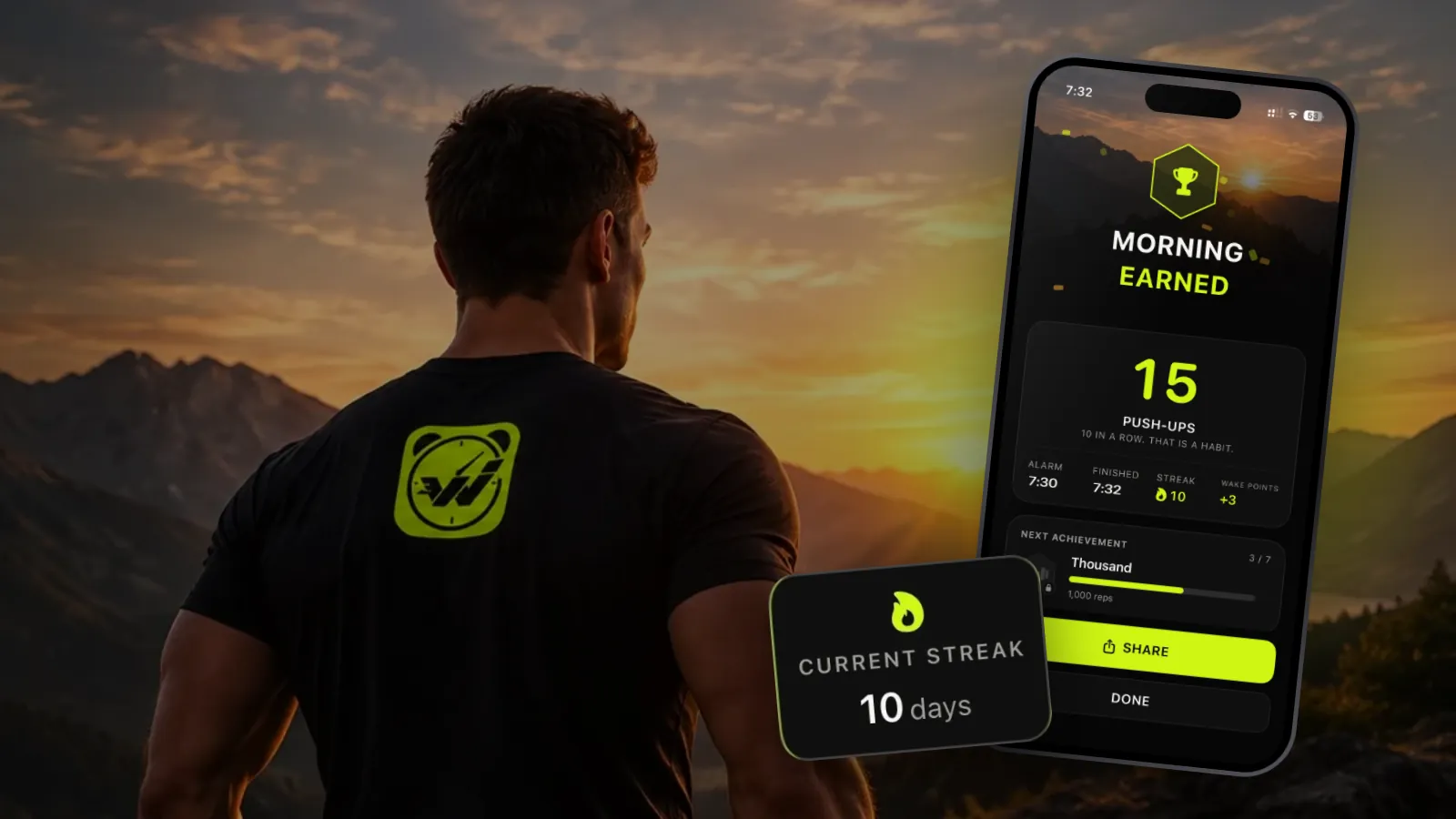
- It ends with reps. The morning only counts once the camera has counted your push-ups or squats.
 Emergency AlarmWake track
 Wake The BeastLyrics
 Beast ModeLyrics
What Wakeletics can't do is make your phone louder than its speaker, or wake someone who can't hear alarms. If you have hearing loss or you sleep through sound of any kind, a dedicated alarm with a bed shaker is the right tool, and the doctor list above applies.
The short version
- The usual reasons people sleep through alarms are too little sleep, alcohol, sleeping pills, background noise, hearing loss and simply being a heavy sleeper.
- To wake people, low, buzzy sounds beat thin, high beeps. Melodic sounds may help you feel less groggy once you're up.
- Test the alarm at your pillow, put the phone in the open and further away, and cut the background noise.
- If you sleep long and still can't wake, or someone notices breathing pauses, see a doctor.
Sources
Bruck D, Ball M. Optimizing emergency awakening to audible smoke alarms: an update. Human Factors. 2007;49(4):585–601. doi:10.1518/001872007X215674
Bruck D, Thomas IR. Smoke alarms for sleeping adults who are hard-of-hearing: comparison of auditory, visual, and tactile signals. Ear and Hearing. 2009;30(1):73–80. doi:10.1097/AUD.0b013e3181906f89
Bruck D, Ball M, Thomas I, Rouillard V. How does the pitch and pattern of a signal affect auditory arousal thresholds? Journal of Sleep Research. 2009;18(2):196–203. doi:10.1111/j.1365-2869.2008.00710.x
Ermis U, Krakow K, Voss U. Arousal thresholds during human tonic and phasic REM sleep. Journal of Sleep Research. 2010;19(3):400–406. doi:10.1111/j.1365-2869.2010.00831.x
McFarlane SJ, Garcia JE, Verhagen DS, Dyer AG. Alarm tones, music and their elements: Analysis of reported waking sounds to counteract sleep inertia. PLOS ONE. 2020;15(1):e0215788. doi:10.1371/journal.pone.0215788
McFarlane SJ, Garcia JE, Verhagen DS, Dyer AG. Auditory countermeasures for sleep inertia: exploring the effect of melody and rhythm in an ecological context. Clocks & Sleep. 2020;2(2):208–224. doi:10.3390/clockssleep2020017
McFarlane SJ, Garcia JE, Verhagen DS, Dyer AG. Alarm tones, voice warnings, and musical treatments: a systematic review of auditory countermeasures for sleep inertia in abrupt and casual awakenings. Clocks & Sleep. 2020;2(4):416–433. doi:10.3390/clockssleep2040031
Watson NF, et al. Recommended amount of sleep for a healthy adult: a joint consensus statement of the American Academy of Sleep Medicine and Sleep Research Society. Sleep. 2015;38(6):843–844. doi:10.5665/sleep.4716
Keep reading
All articles →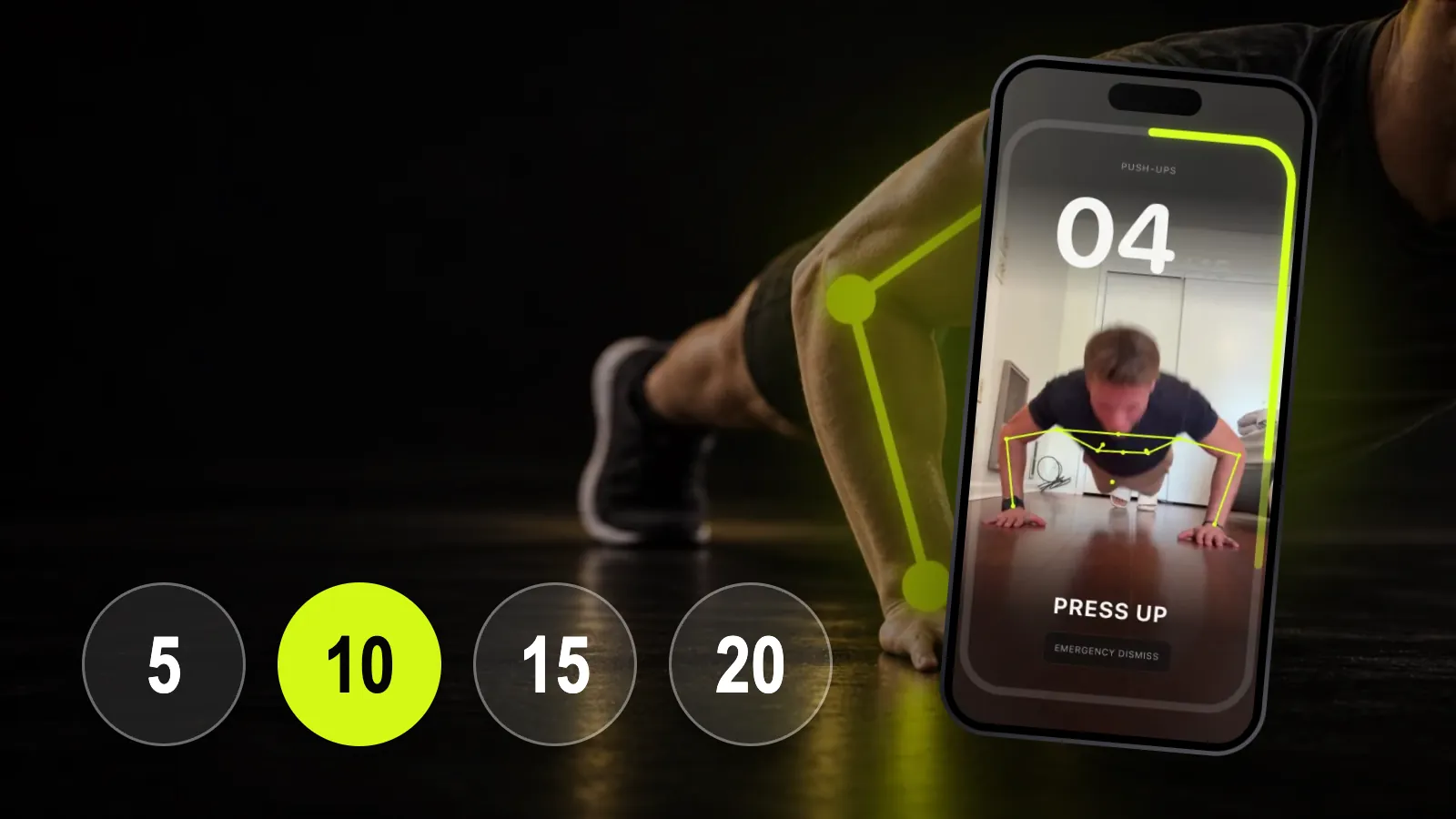 Guides
How many push-ups should I do every morning, and is it OK right after waking?
There's no magic number. Here's how to pick yours, why a wake-up set isn't a workout, what the research says about push-ups and health, and how to look after your back first thing.
4 October 2026 · 7 min read
 Guides
How to get out of bed when your alarm goes off: the first 10 minutes
Nothing makes you sharp the second you wake up, and the research is honest about that. What does help is getting vertical fast. A minute-by-minute plan, with what's evidence and what's just habit.
4 October 2026 · 7 min read
 Guides
How to stop snoozing your alarm: a 7-day plan
Snoozing itself isn't the enemy. A snooze that never ends is. Here is why the button wins, what helps, and a one-week plan to get up on the first ring.
4 October 2026 · 7 min read
Coming soon to iPhone
Rings that don't give up.
Choose the sound and how many backup rings follow it. Silence one, and the next is already coming, until the reps are done.
Not in the App Store yet. wakeletics.app walks you through the whole app.