

Research
Your alarm sets your schedule. Light sets your clock.
An alarm decides when you open your eyes. What decides whether your body agrees is the light you get in the following hour — and indoor lighting barely registers.
By Daniel & Samuel Krucay, co-founders of Wakeletics
· 27 August 2026 · 6 min read

There is a difference between waking up and your body waking up, and the two are governed by completely different things.
An alarm handles the first. The second is handled almost entirely by light.
How the clock is actually set
Your circadian rhythm runs on a cycle that is close to, but not exactly, 24 hours. Left with no external cues it drifts. Something has to nudge it back into alignment every day, and as Blume, Garbazza and Spitschan set out in their 2019 review in Somnologie, that something is light reaching the retina and travelling to the suprachiasmatic nuclei in the hypothalamus — the master clock that then synchronises the rhythms running throughout your body.
The critical detail is that light's effect depends on when it arrives. Light in the early subjective morning advances the clock, pulling your natural sleep and wake times earlier. The same light in the late evening pushes it the other way. This is why screens at midnight are a genuine problem, and it is why the hour after your alarm is disproportionately valuable.
Indoor light is dimmer than you think
Here is the part most people get wrong, because human vision is excellent at hiding it.
A well-lit room feels bright. Measured, typical indoor lighting sits in the low hundreds of lux. An overcast day outdoors is several thousand. Direct sun is tens of thousands. Clinical protocols that reliably shift circadian timing have used bright light in the region of 5,000 to 10,000 lux.
Your eyes adapt so smoothly that a room at 300 lux and a garden at 10,000 both just read as "daytime." Your circadian system is not fooled, and it responds to the actual quantity.

The practical consequence: getting up in a dim bedroom and staying there does very little for your body clock, no matter how early the alarm was. The schedule moved. The clock did not.
What this means in practice
- Get outside, or to a window, early. Even a few minutes of genuine daylight beats an hour of ceiling light.
- An overcast morning still counts. Grey daylight is an order of magnitude brighter than your kitchen.
- The hour after waking is the leverage point. Same light, later, does less.
- Consistency matters more than intensity. A moderate dose at a stable time entrains better than an occasional heroic one.
Where Wakeletics fits, honestly
Wakeletics is not a light therapy device and does not claim to be. Your phone screen — even at full brightness, even held close — is nowhere near the illuminance that shifts circadian timing.
What it does is more mundane and, on most mornings, more decisive: it gets you vertical and out of bed. Being upright, moving, and finished with a set of push-ups puts you in a position where opening a curtain or stepping outside is a small next step rather than a plan you had while lying down.
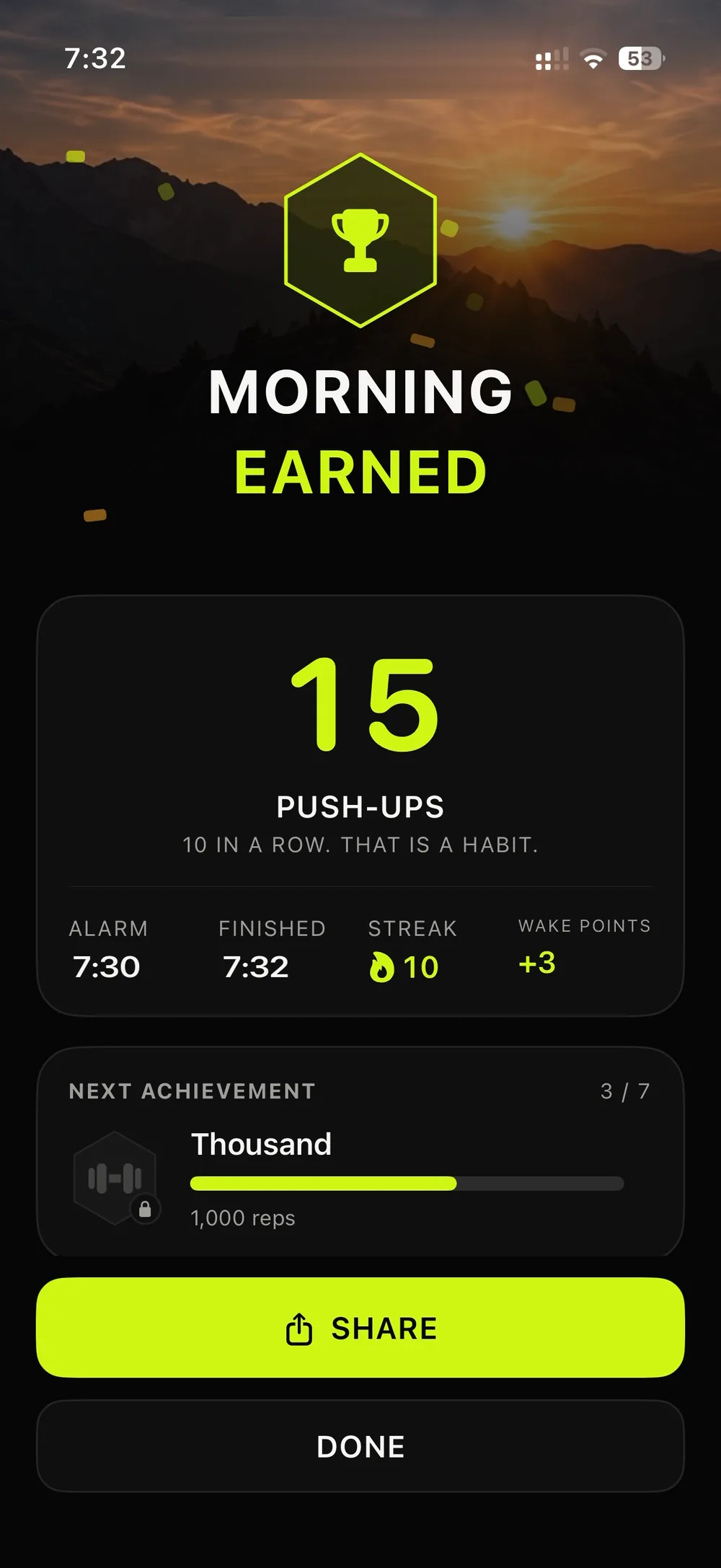
The app handles the part that fails. The light is free, and it is the part that actually moves the clock — so once you are up, go and get some.
Source
Blume C, Garbazza C, Spitschan M. Effects of light on human circadian rhythms, sleep and mood. Somnologie. 2019;23(3):147–156. doi:10.1007/s11818-019-00215-x
Keep reading
All articles →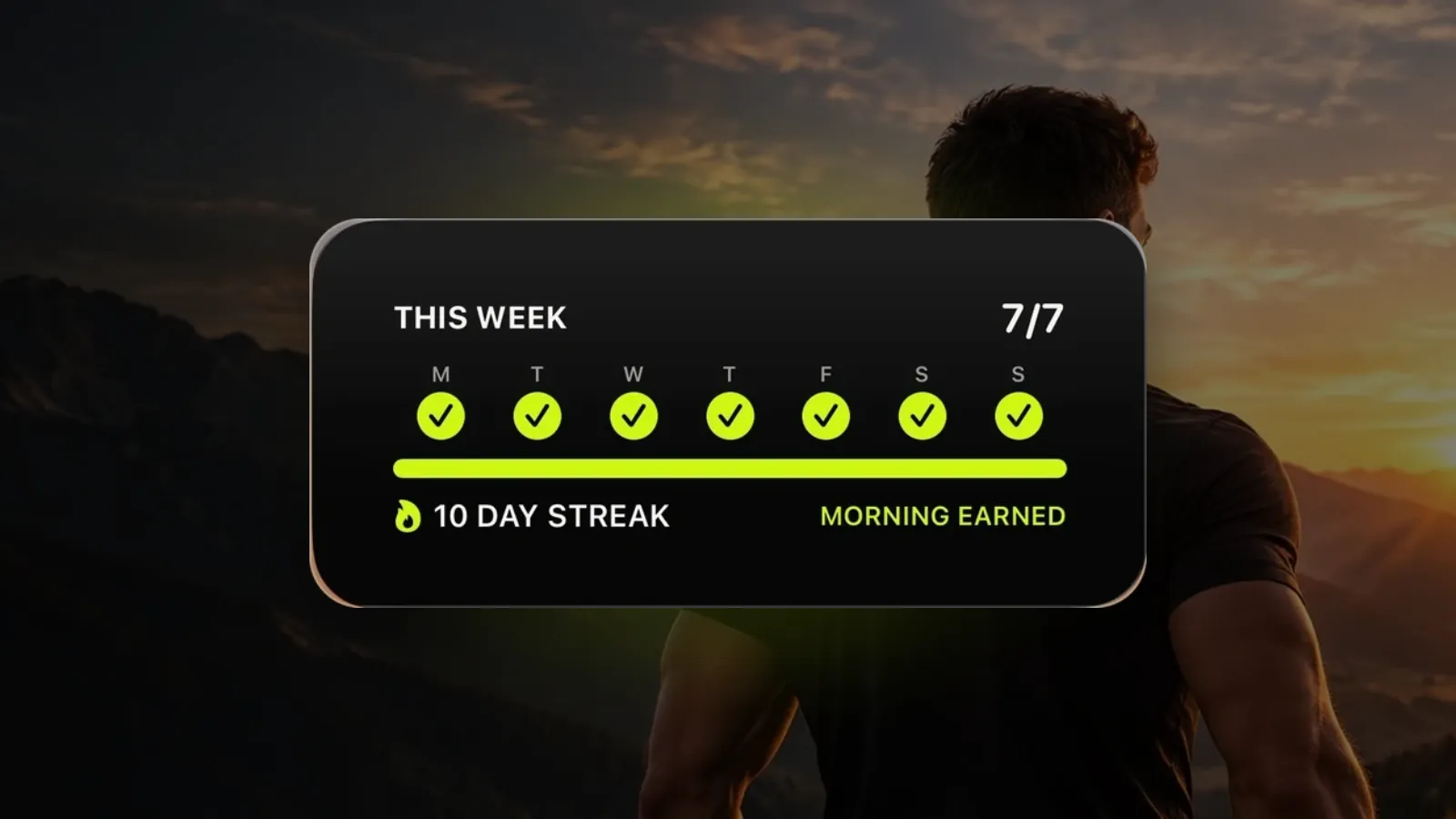 Research
The weekend lie-in has a name, and a cost
About 70% of working people carry a permanent two-hour time-zone shift between their weekdays and weekends. Chronobiologists call it social jetlag.
26 August 2026 · 7 min read
 Research
How long until a morning workout stops being a decision?
Not 21 days. The real study found a median of 66 — and a range wide enough to explain why most habit advice fails you.
25 August 2026 · 6 min read
 Research
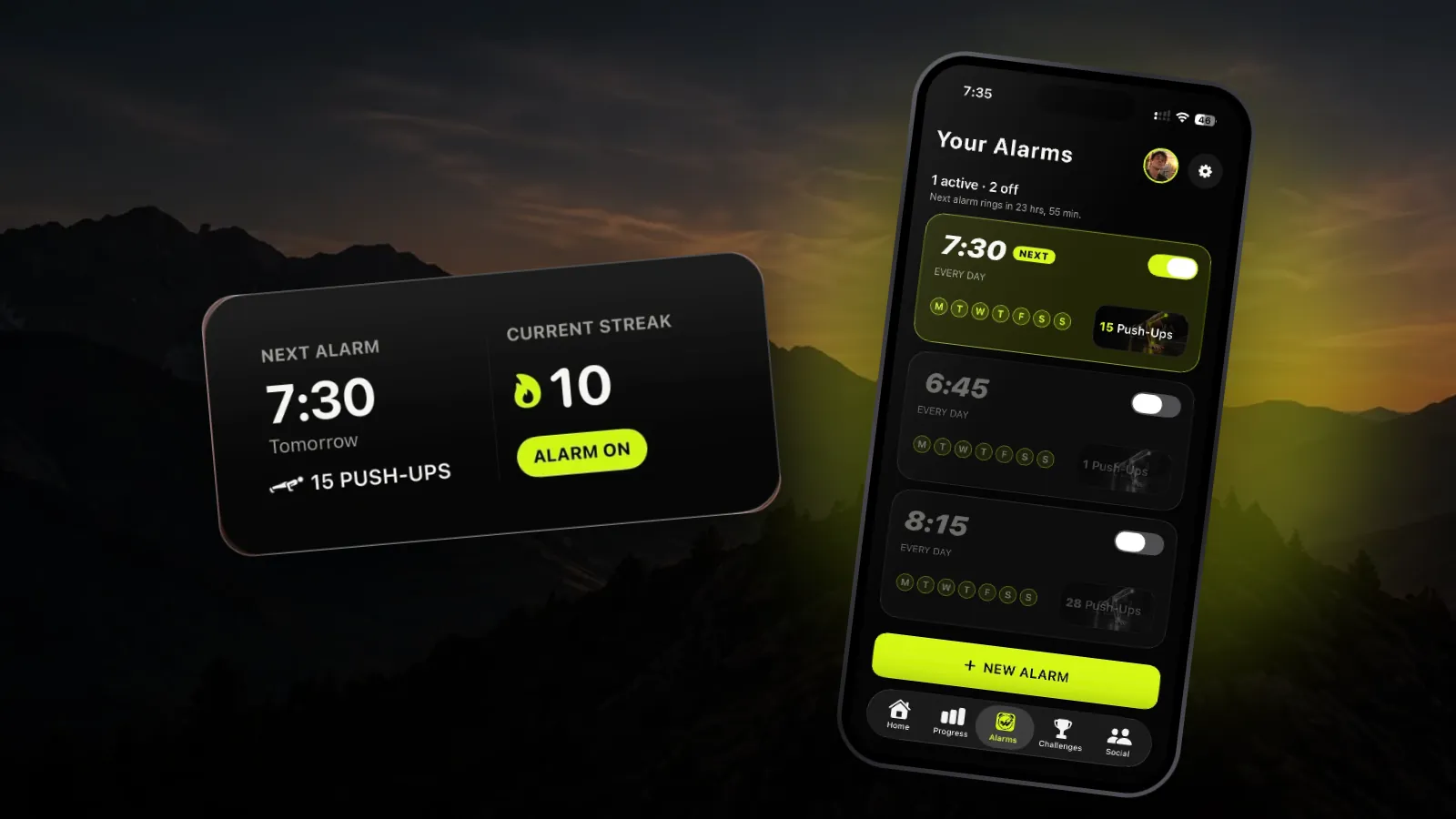
Is the snooze button actually bad for you?
A 2024 sleep-lab study put habitual snoozers on polysomnography and tested them. The result is not what wake-up apps usually claim.
24 August 2026 · 6 min read
Coming soon to iPhone
Get up. Then get outside.
Wakeletics handles the part that fails: getting you out of bed and moving. The daylight is on you — and it's free.
Not in the App Store yet. wakeletics.app walks you through the whole app.