

Guides
How to get out of bed when your alarm goes off: the first 10 minutes
Nothing makes you sharp the second you wake up, and the research is honest about that. What does help is getting vertical fast. A minute-by-minute plan, with what's evidence and what's just habit.
By Daniel & Samuel Krucay, co-founders of Wakeletics
· 4 October 2026 · 7 min read
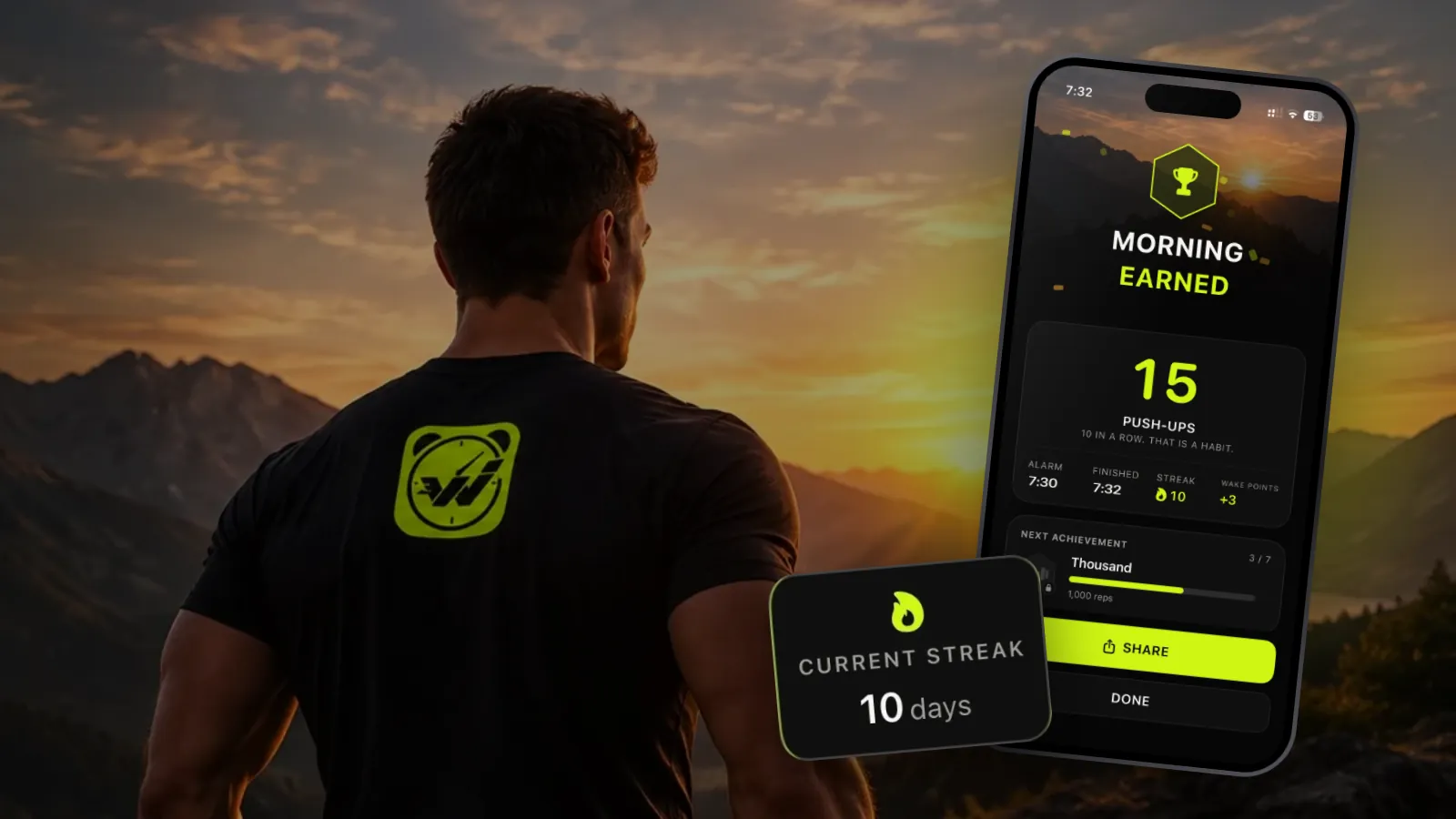
The alarm rings. You know you should get up. Then you open your eyes again and twenty minutes have gone. Getting out of bed is rarely a question of motivation. It's a question of what happens in the first minute, when the part of you that has to decide is still half asleep.
This guide goes through the first ten minutes after the alarm. For each step it says whether there's research behind it or whether it's simply a habit that works for many people.
The short answer
Decide your first move the night before. Put the alarm where you have to stand up to stop it. When it rings, stand up first and think later. Then, in the next few minutes, get light and move a little. Keep coffee, your phone and any important decisions for a bit later.
What the research can and can't promise
It helps to know what you're up against. The groggy first stretch after waking is called sleep inertia: for a while, reactions are slower and thinking is worse than once you're properly awake (the full story).
Researchers have tried a range of things to make it pass faster: light, temperature, sound, caffeine and exercise. A 2016 review of these "reactive countermeasures" was blunt. None of them had convincing evidence of making people perform better soon after waking. Caffeine was probably the best option, but it worked best when taken before sleep, so it isn't really a fix for after the alarm. Light and temperature made people feel more alert, but it wasn't clear that they actually performed better (Hilditch et al., 2016).
Two later experiments tested exactly that, and got the same split:
- Light. In a 2024 study, 36 people tested light-emitting glasses at home, woken 45 minutes after going to bed. With the light on, they rated themselves more alert and more energetic. Their reaction-time test didn't improve (Hilditch et al., 2024).
- Exercise. In a 2021 lab study, 15 people were woken at 2 AM and did 30 seconds on an exercise bike. After a 30-second sprint they felt less sleepy than when they stayed still. Their thinking tests were no better (Kovac et al., 2021).
Both studies woke people at night rather than in the morning, so they aren't a perfect match for your alarm. But the message is consistent, and it's useful:
You can make yourself feel awake within minutes. You can't make yourself sharp within minutes.
Getting out of bed only needs the first. The second just takes time.
The first 60 seconds: get vertical
This is the minute that decides the morning. The goal is simple: be standing before you've had the chance to argue about it.
- Feet on the floor, then stand. Don't check the time, don't plan the day. Sit up, put your feet down and stand. Habit, not research, but it's the step everything else depends on.
- Have the decision already made. Last night you decided what the first move is. Plans written as if this happens, I'll do that make people more likely to follow through. In a review of 94 studies the effect was clear, although none of the studies were about alarms (Gollwitzer & Sheeran, 2006). Evidence, from outside sleep research.
- The alarm should be out of reach. If you can switch it off lying down, you will. If it's across the room, the first 60 seconds take care of themselves.
Minutes 1 to 5: light and movement
Once you're up, use the next few minutes to feel more awake.
- Light. Open the curtains, switch on the main light, or step outside for a minute. It made people feel more alert straight away in the study above, and it is the strongest signal for your body clock over the long run (Light sets your clock). Evidence.
- Move. Ten squats, a few push-ups, a quick walk around the flat. In the 2021 study, even 30 seconds of hard effort made people feel less sleepy. A short, easy set is enough here; this isn't your workout for the day. Evidence for feeling more awake, not for thinking faster.
- Water. A glass of water is a nice habit and gets you to the kitchen. There's no good evidence that it wakes you up. Habit.
Minutes 5 to 10: coffee, phone, decisions
- Coffee. It's fine to have it now. It just won't solve the first five minutes, because caffeine takes a while to work. That is why the review found it worked best when taken before sleep. Don't take that as advice to drink coffee at bedtime: it would cost you sleep you need. Evidence.
- The phone. We'd keep messages and feeds until after the first ten minutes. Nothing about this is proven. It just stops the phone becoming a reason to lie back down. Our preference.
- Big decisions and driving. The review's practical advice for people woken for work was to avoid safety-critical tasks straight after waking. At home that means: don't reply to the difficult email at 6:02, and give yourself a bit of time before you drive. Evidence.
If you still can't get up
If this works most days but some mornings you simply can't move, the cause is usually the night before: too little sleep, or a wake time that jumps around between weekdays and weekends (why weekends count). Adults need seven hours or more. No routine replaces them.
If you're getting the sleep and still can't wake, or you keep switching the alarm off without remembering it, read I turn off my alarm in my sleep, including the part about when to see a doctor.
Where Wakeletics fits
Wakeletics was designed around the first minute.
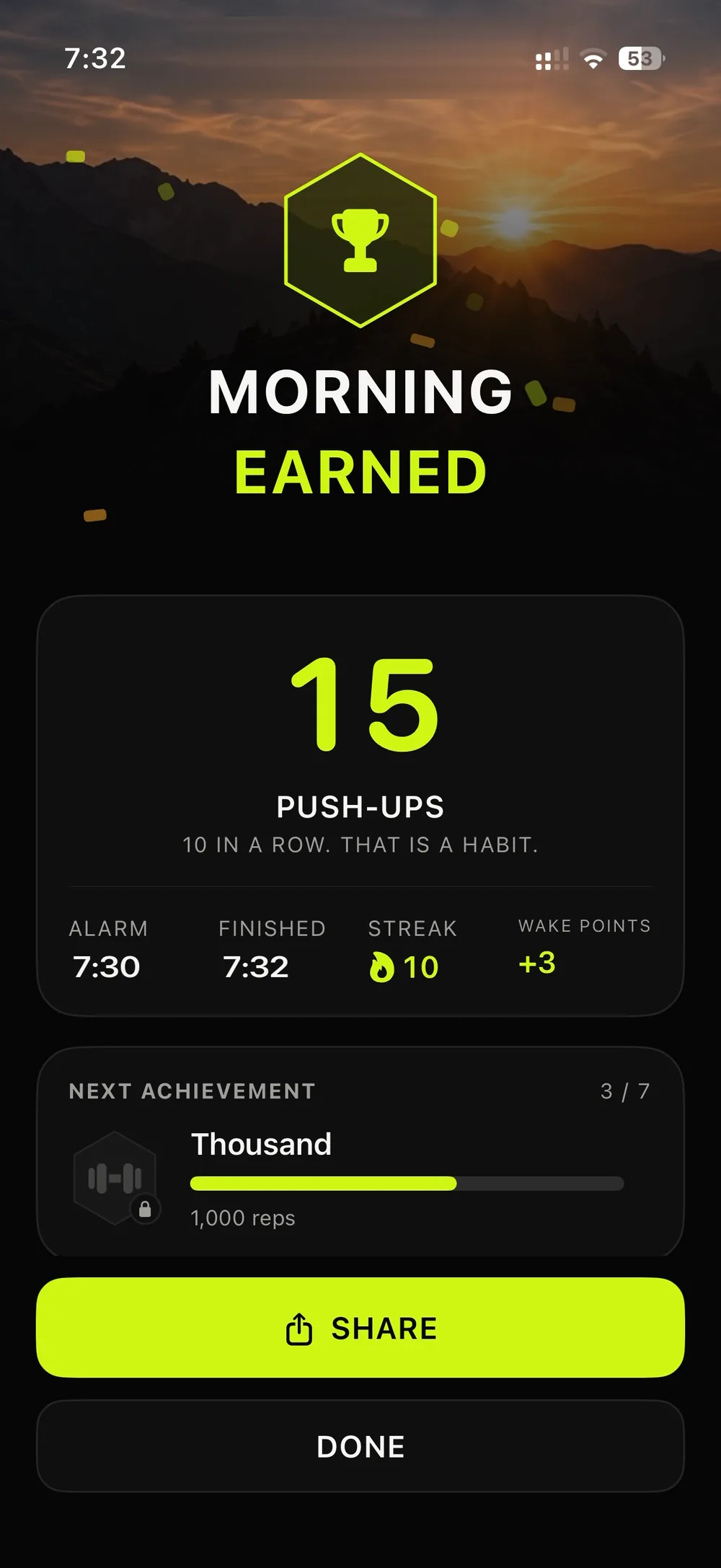
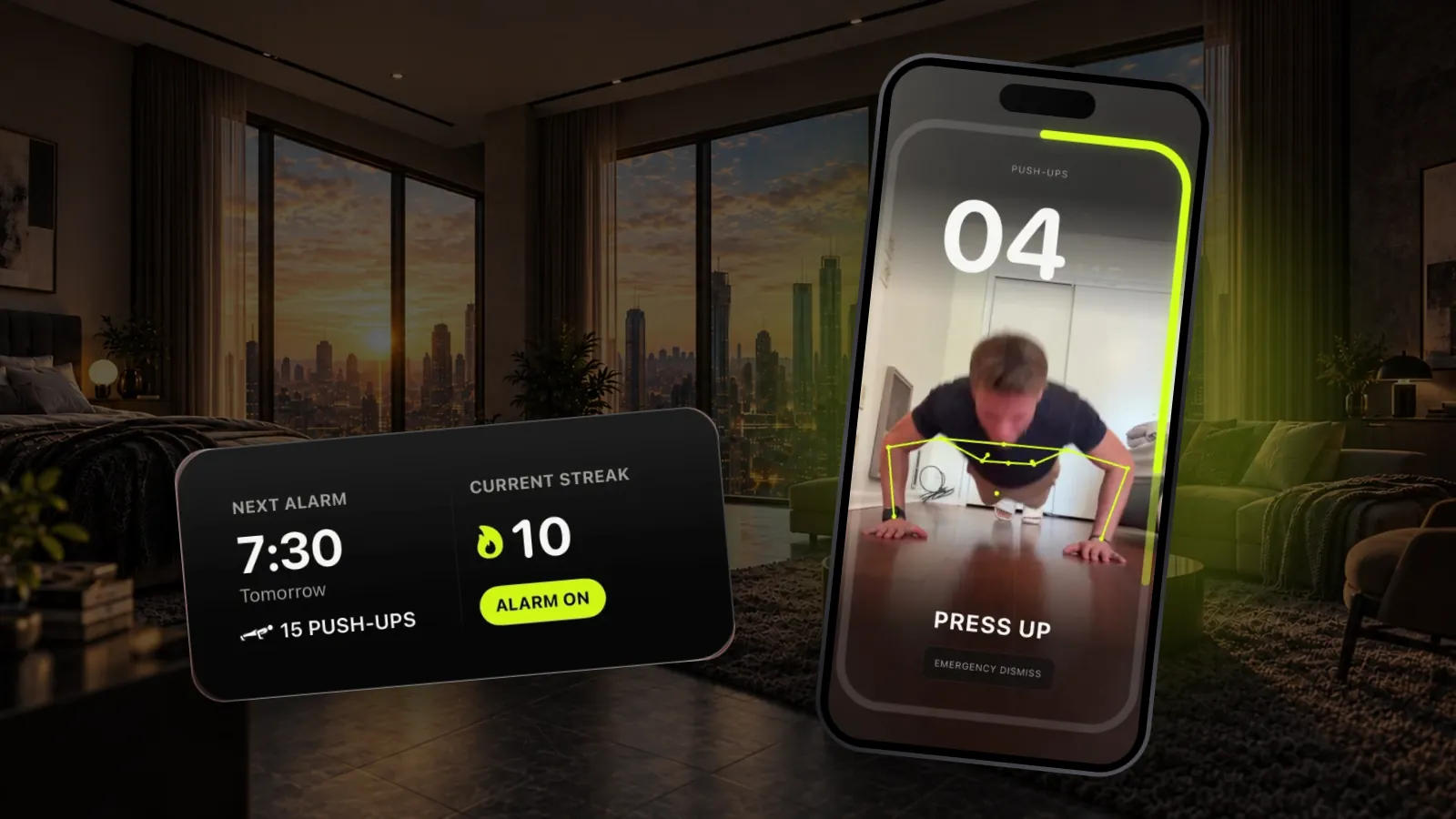
- The decision is made at night. Each alarm has a time, an exercise and a number of reps. There's also an evening reminder (Wind-down reminder in Settings) that asks Set tomorrow's morning: 15 squats at 6:30?, which you confirm with one tap.
- The first move is already decided. When the alarm rings, you put the phone down, step into the camera's view and do the reps. The camera counts each full rep on the phone itself, and no video is recorded or uploaded.
- It ends when you're up. Silencing one ring doesn't end the morning, because the next backup ring is already on its way. The morning counts as earned when the reps are done, and that's the first five minutes of this guide done too.
The short version
- You can feel awake within minutes. Being sharp takes longer, so don't plan anything important for the first ten minutes.
- Stand up before you think. Make that easier by deciding the first move the night before and putting the alarm out of reach.
- Light and a short bit of movement make you feel more awake. Coffee works, just not straight away.
- If none of this helps, look at how much you're sleeping first.
Sources
Hilditch CJ, Dorrian J, Banks S. Time to wake up: reactive countermeasures to sleep inertia. Industrial Health. 2016;54(6):528–541. doi:10.2486/indhealth.2015-0236
Hilditch CJ, Pradhan S, Costedoat G, et al. An at-home evaluation of a light intervention to mitigate sleep inertia symptoms. Sleep Health. 2024;10(1S):S121–S129. doi:10.1016/j.sleh.2023.07.015
Kovac K, Vincent GE, Paterson JL, Reynolds A, Aisbett B, Hilditch CJ, Ferguson SA. The impact of a short burst of exercise on sleep inertia. Physiology & Behavior. 2021;242:113617. doi:10.1016/j.physbeh.2021.113617
Gollwitzer PM, Sheeran P. Implementation intentions and goal achievement: A meta-analysis of effects and processes. Advances in Experimental Social Psychology. 2006;38:69–119. doi:10.1016/S0065-2601(06)38002-1
Watson NF, et al. Recommended amount of sleep for a healthy adult: a joint consensus statement of the American Academy of Sleep Medicine and Sleep Research Society. Sleep. 2015;38(6):843–844. doi:10.5665/sleep.4716
Keep reading
All articles →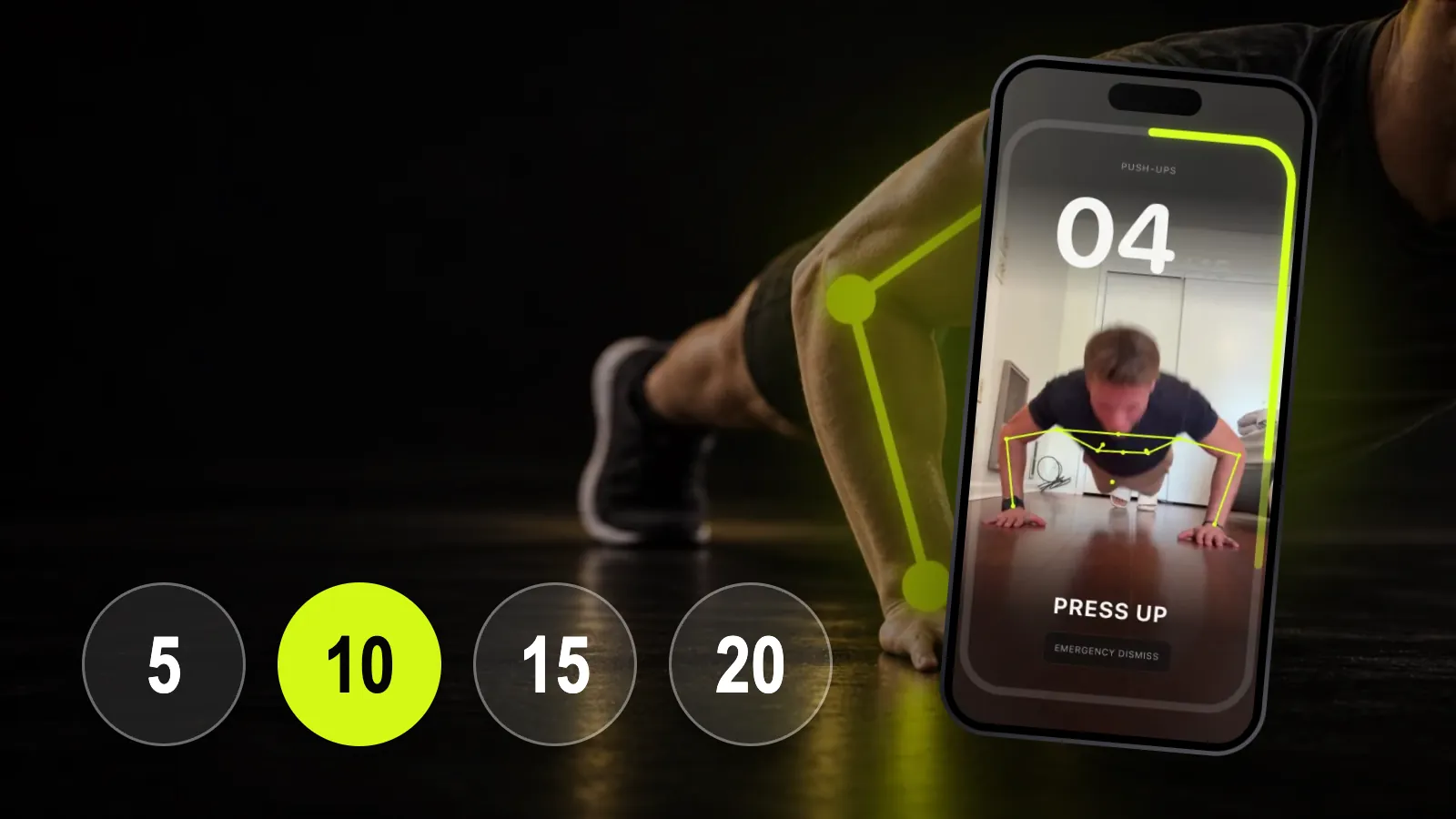 Guides
How many push-ups should I do every morning, and is it OK right after waking?
There's no magic number. Here's how to pick yours, why a wake-up set isn't a workout, what the research says about push-ups and health, and how to look after your back first thing.
4 October 2026 · 7 min read
 Guides
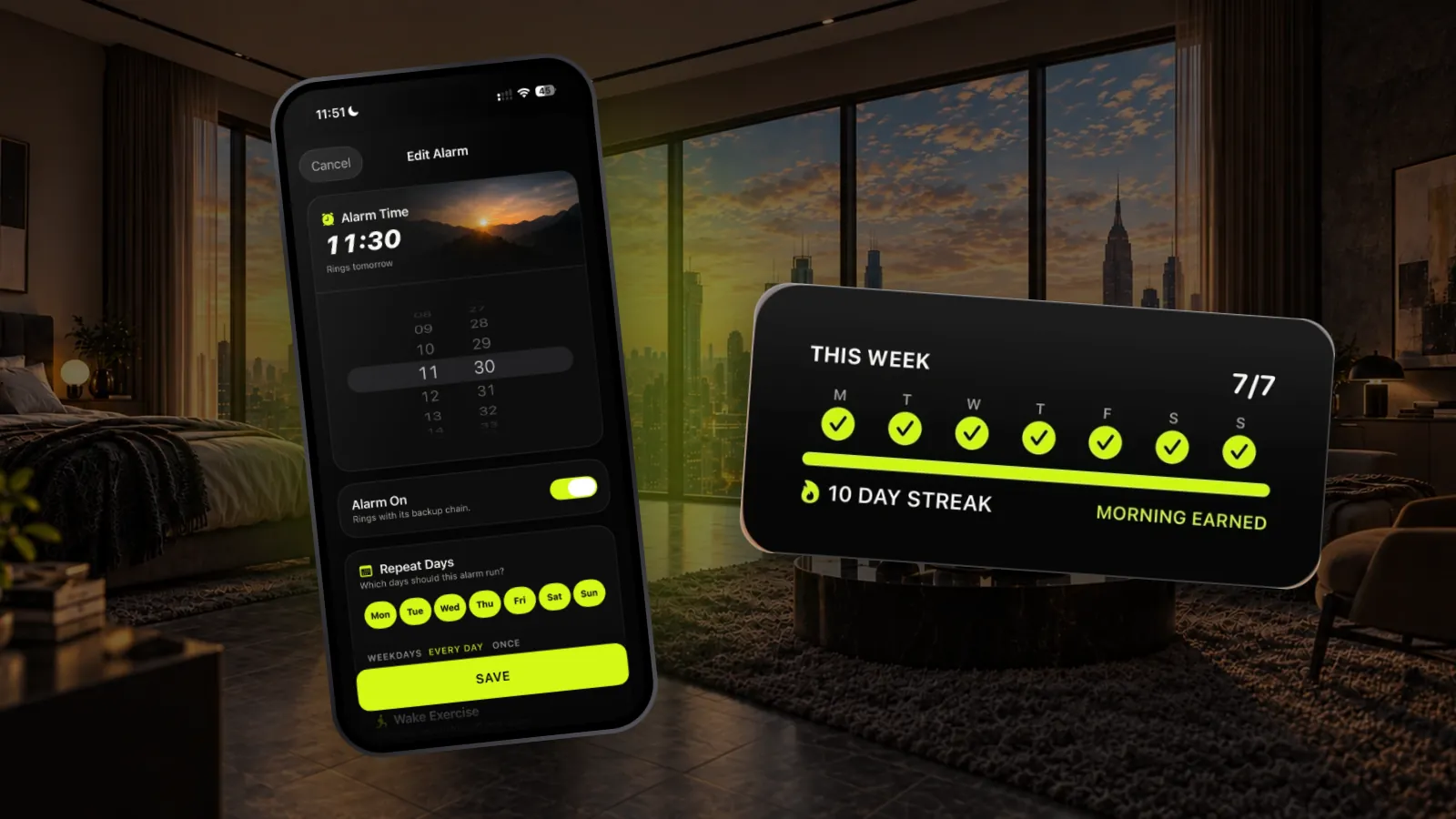
How to stop snoozing your alarm: a 7-day plan
Snoozing itself isn't the enemy. A snooze that never ends is. Here is why the button wins, what helps, and a one-week plan to get up on the first ring.
4 October 2026 · 7 min read
 Guides
I turn off my alarm in my sleep. What can I do?
Why you can silence an alarm and have no memory of it, how common it is, when it's worth asking a doctor, and seven fixes, from the easiest to the strongest.
4 October 2026 · 8 min read
Coming soon to iPhone
Make the first minute automatic.
Decide the time, the exercise and the reps tonight. Tomorrow the alarm only ends when you're up and moving.
Not in the App Store yet. wakeletics.app walks you through the whole app.