

Research
The weekend lie-in has a name, and a cost
About 70% of working people carry a permanent two-hour time-zone shift between their weekdays and weekends. Chronobiologists call it social jetlag.
By Daniel & Samuel Krucay, co-founders of Wakeletics
· 26 August 2026 · 7 min read
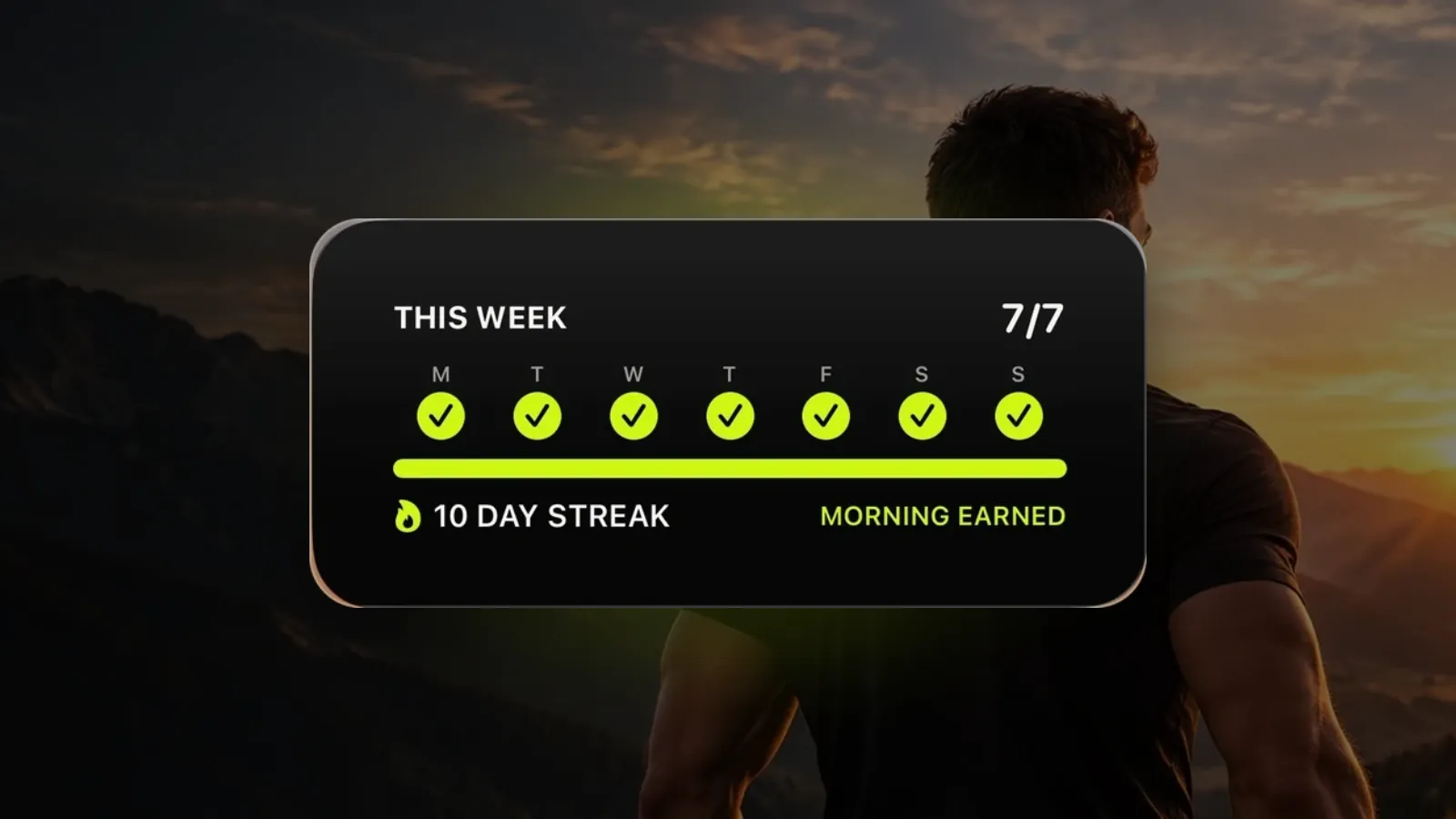
You wake at 6:30 on weekdays. On Saturday you sleep until 10. That feels like recovery, and in one narrow sense it is — you get sleep you were short of.
But your body clock does not read it that way. It reads it as flying two time zones west on Friday night and back east on Monday morning. Every week. For years.
The measurement
The concept was named in 2006 by Till Roenneberg's group, and chronobiologists calculate it with a formula that is almost insultingly simple:
Social jetlag = | midsleep on free days − midsleep on work days |
Midsleep is the halfway point of your night. Bed at 23:00, up at 06:30 puts your midweek midsleep at 02:45. Bed at 01:00, up at 10:00 on Saturday puts your free-day midsleep at 05:30. The gap — 2 hours 45 minutes — is your social jetlag.
A 2021 review in Nutrients by Caliandro and colleagues puts the scale of this at roughly 70% of the studying and working population in industrialised countries, with almost half of those carrying two hours or more.
Two hours is not a rounding error. It is the difference between London and Moscow.
What it is associated with
The review links social jetlag to a long list: poor sleep quality and cognitive impairment, reduced academic and work performance, obesity, type-2 diabetes, metabolic syndrome, dyslipidemia, elevated cortisol, altered heart rate variability, elevated resting heart rate, and symptoms of depression and ADHD.
A necessary caveat. Those are associations drawn from observational research, not proof that the weekend lie-in causes them. People with large social jetlag differ in other ways too — they tend to be later chronotypes, often younger, often in jobs whose hours fight their biology. Untangling cause from correlate is genuinely hard and the literature has not finished doing it.
What is not really in dispute is the mechanism underneath: your circadian system is entrained by regular cues, and shifting your sleep timing by hours every weekend removes the regularity. You are not resting the clock. You are resetting it, twice a week, in opposite directions.
The uncomfortable implication
The fix is not more discipline about bedtime. Bedtime is the half people obsess over and the half they control least — you cannot reliably decide to become sleepy.
Wake time is the controllable end. It is a decision, executed once, at a moment when a device can intervene. And it is the end that anchors the clock, because morning is when light exposure has its strongest phase-setting effect.
Which produces an unpopular conclusion: if you want to reduce social jetlag, the lever is getting up at roughly the same time on Saturday as on Tuesday. Not identical to the minute. But an hour of drift, not four.
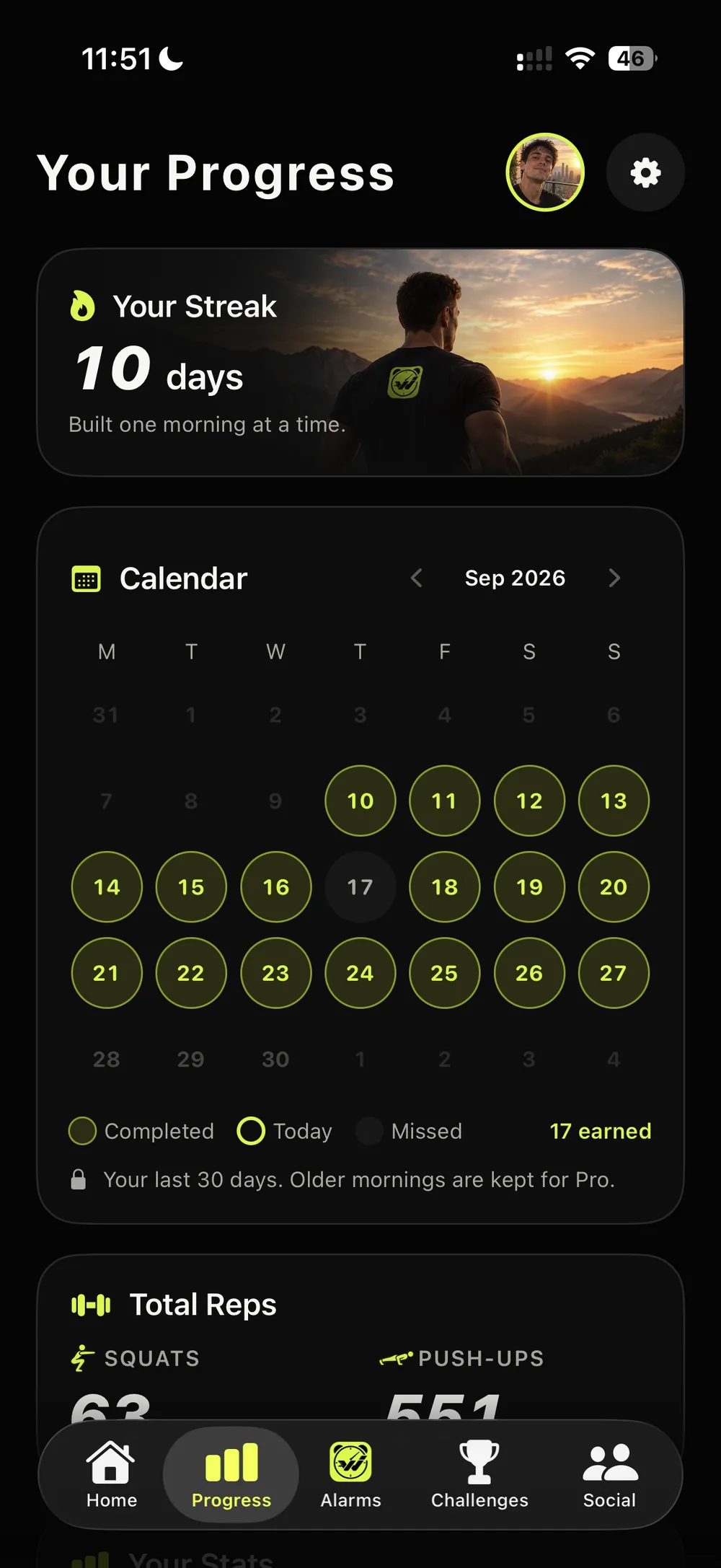
Why Wakeletics counts weekends
This is the reason the streak does not politely skip Saturday and Sunday.
Most habit apps let weekends slide, because that is what users want and it keeps the numbers looking good. But a wake-up habit that only exists on weekdays is precisely the pattern that produces social jetlag in the first place. Building an app that rewards it would mean optimising the metric while making the underlying problem worse.
So a Saturday morning counts the same as a Tuesday one, and skipping it breaks the streak the same way. Not because we think you should never lie in — occasionally, obviously, do — but because the count should tell you the truth about your consistency, and consistency is the entire mechanism.
Sources
Caliandro R, Streng AA, van Kerkhof LWM, van der Horst GTJ, Chaves I. Social Jetlag and Related Risks for Human Health: A Timely Review. Nutrients. 2021;13(12):4543. doi:10.3390/nu13124543
Wittmann M, Dinich J, Merrow M, Roenneberg T. Social jetlag: misalignment of biological and social time. Chronobiology International. 2006;23(1–2):497–509. doi:10.1080/07420520500545979
Keep reading
All articles → Research
Your alarm sets your schedule. Light sets your clock.
An alarm decides when you open your eyes. What decides whether your body agrees is the light you get in the following hour — and indoor lighting barely registers.
27 August 2026 · 6 min read
 Research
How long until a morning workout stops being a decision?
Not 21 days. The real study found a median of 66 — and a range wide enough to explain why most habit advice fails you.
25 August 2026 · 6 min read
 Research
Is the snooze button actually bad for you?
A 2024 sleep-lab study put habitual snoozers on polysomnography and tested them. The result is not what wake-up apps usually claim.
24 August 2026 · 6 min read
Coming soon to iPhone
Saturday counts.
One wake-up habit, seven days a week. Your streak tells you the truth about your consistency — weekends included.
Not in the App Store yet. wakeletics.app walks you through the whole app.