

Guides
Push-ups vs squats in the morning: which should you choose?
Upper body or legs, floor or standing, quiet or not. What each movement works, what it asks of you at 6 AM, and how to choose, including where the phone goes for each.
By Daniel & Samuel Krucay, co-founders of Wakeletics
· 4 October 2026 · 6 min read

If you want to move first thing in the morning, two bodyweight exercises need no kit, no gym and almost no space: the push-up and the squat. They're also the two movements Wakeletics counts. So which one should be your morning move?
The short answer
Choose squats if you're starting out, if someone is still asleep in the room, or if your bedroom is dark when the alarm goes off. Choose push-ups if you want to work your upper body and you have a bit of floor. And if you can't decide, alternate: the two cover different halves of the body.
The best morning exercise is the one you'll actually do while you're still half asleep. Everything below is about making that choice well.
What each one works
The push-up is an upper-body push. The main muscles are the chest, the front of the shoulders and the triceps at the back of the arm. Because you hold a plank the whole time, your stomach muscles work too. A lab study comparing push-up variations with the bench press measured all of these, and found that the chest, the front of the shoulder and the serratus muscles along the ribs worked hardest in the stable versions, such as a push-up on the floor (Calatayud et al., 2014).
The squat is a lower-body movement. The thighs and the glutes do most of the work, and your back and stomach keep your upper body upright on the way down and up. It is the movement you use every time you sit down and stand up again, which is part of why it feels manageable early in the day.
Neither one covers everything. The WHO recommends muscle-strengthening activity that involves all major muscle groups on two or more days a week (Bull et al., 2020). Push-ups on some days and squats on others gets you closer to that than either one alone.


Five things that decide it at 6 AM
1. How hard it feels when you're half awake
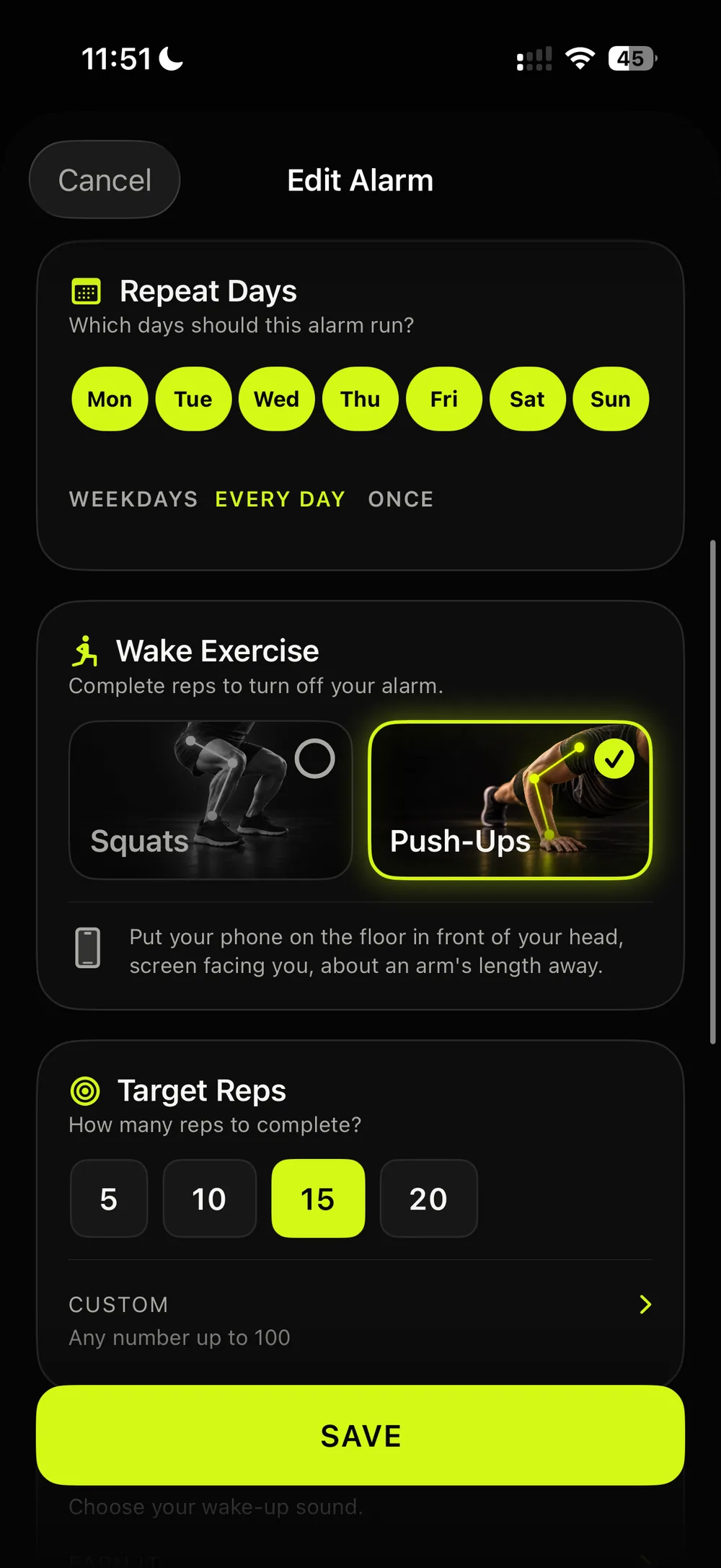
Most people can do more squats than push-ups. That's why the rep targets in Wakeletics start lower for push-ups (5, 10, 15 or 20) than for squats (10, 15, 20 or 30), and why Wakeletics starts you on squats: 15 of them, unless you change it. A first morning that goes well is worth more than an ambitious one that doesn't happen.
2. Space and noise
A squat needs the floor space you're already standing on. A push-up needs room to lie out at full length, which in a small bedroom can mean moving something first. Squats are also the quieter choice: there's no getting down to the floor and back, which matters if someone else is still asleep.
3. Your back in the morning
Your spine is a little different just after a night lying down: the discs between the vertebrae hold more water, and in a classic study, forward bending stressed them noticeably more early in the morning than later in the day (Adams et al., 1987). Neither exercise is a forward bend when it's done well. In a push-up your body stays straight, like a plank. In a squat, keep your chest up and your back straight rather than folding forward. If your back is sensitive in the morning, that's the thing to pay attention to. More on this in how many push-ups every morning.
4. Where the phone goes
If you use Wakeletics, the camera has to see you, so each movement has its own phone position:
- Squats: stand the phone at waist-to-chest height, about 2 m away, facing you. A shelf, a chest of drawers or leaning against a wall all work.
- Push-ups: put the phone on the floor in front of your head, screen facing you, about an arm's length away. You can watch the count go up as you go.
A standing person two metres away is also easier for a camera to follow in a dim room than someone close to the floor. If your room is still dark when the alarm rings and you don't want to switch the main light on straight away, squats are the more forgiving choice.
5. What you want from it
If you want visible upper-body strength, push-ups are the obvious choice. If you want something you can do on any morning, in any room, in any state, squats are hard to beat. Both are equally good at the job that matters most here: getting you out of bed and moving.
Or do both
You don't have to pick one for good. Each Wakeletics alarm has its own exercise, so you can set squats for weekdays and push-ups for the weekend, or switch now and then. One of the weekly challenges, Double Up, asks for exactly that: squats and push-ups in the same week. This week's challenges are here.
The short version
- Squats: easier to start, quieter, need almost no space, and the phone can stand on furniture. Thighs and glutes.
- Push-ups: harder for most people, need floor space, and the phone goes on the floor. Chest, shoulders and arms.
- Both: the WHO recommends working all the major muscle groups. Alternating gets you closer.
- In the morning, keep your back straight in both, and start with a number you're sure you can do.
Sources
Calatayud J, Borreani S, Colado JC, Martin F, Rogers ME. Muscle activity levels in upper-body push exercises with different loads and stability conditions. The Physician and Sportsmedicine. 2014;42(4):106–119. doi:10.3810/psm.2014.11.2097
Bull FC, Al-Ansari SS, Biddle S, et al. World Health Organization 2020 guidelines on physical activity and sedentary behaviour. British Journal of Sports Medicine. 2020;54(24):1451–1462. doi:10.1136/bjsports-2020-102955
Adams MA, Dolan P, Hutton WC. Diurnal variations in the stresses on the lumbar spine. Spine. 1987;12(2):130–137. doi:10.1097/00007632-198703000-00008
Keep reading
All articles →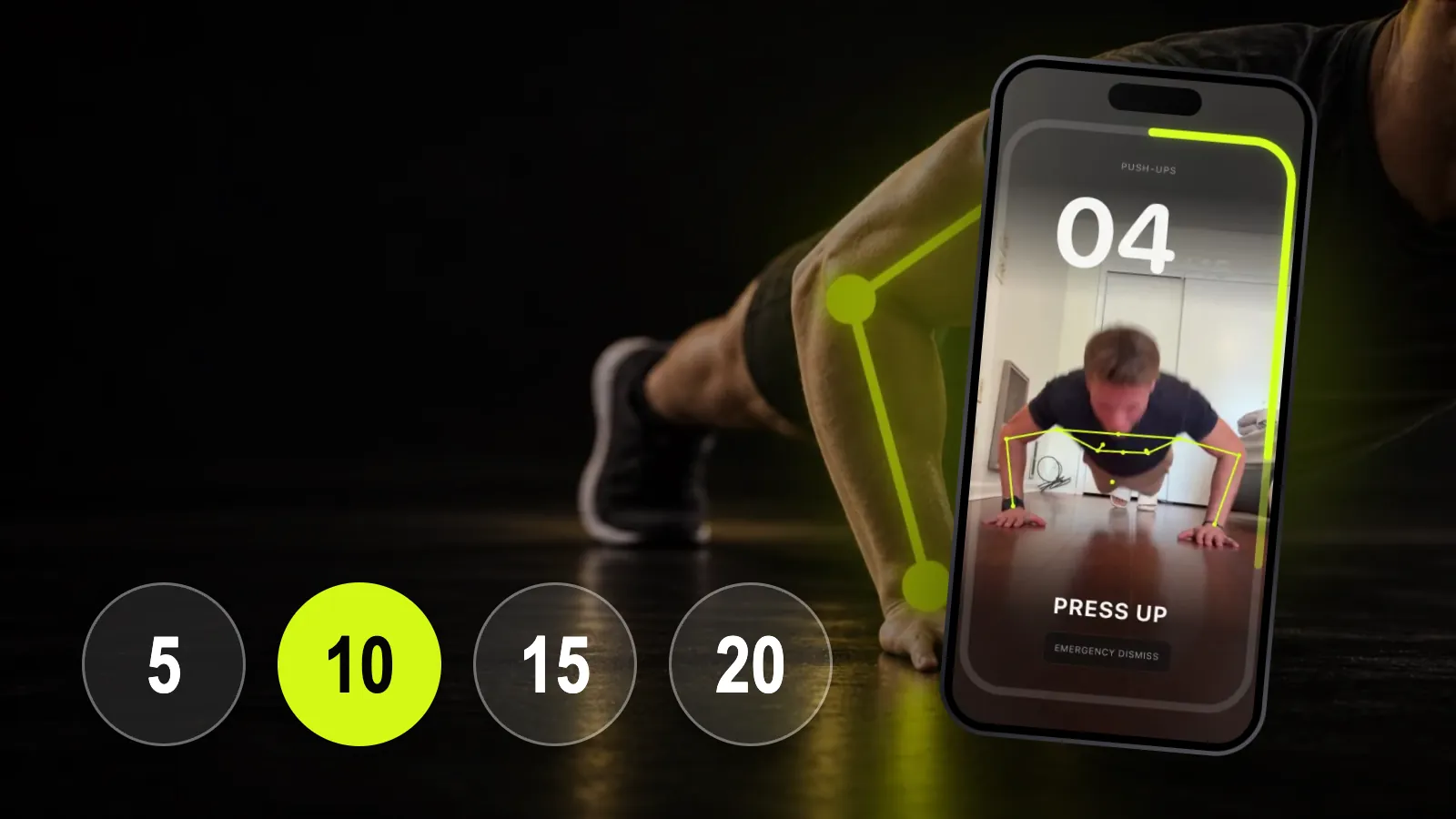 Guides
How many push-ups should I do every morning, and is it OK right after waking?
There's no magic number. Here's how to pick yours, why a wake-up set isn't a workout, what the research says about push-ups and health, and how to look after your back first thing.
4 October 2026 · 7 min read
 Guides
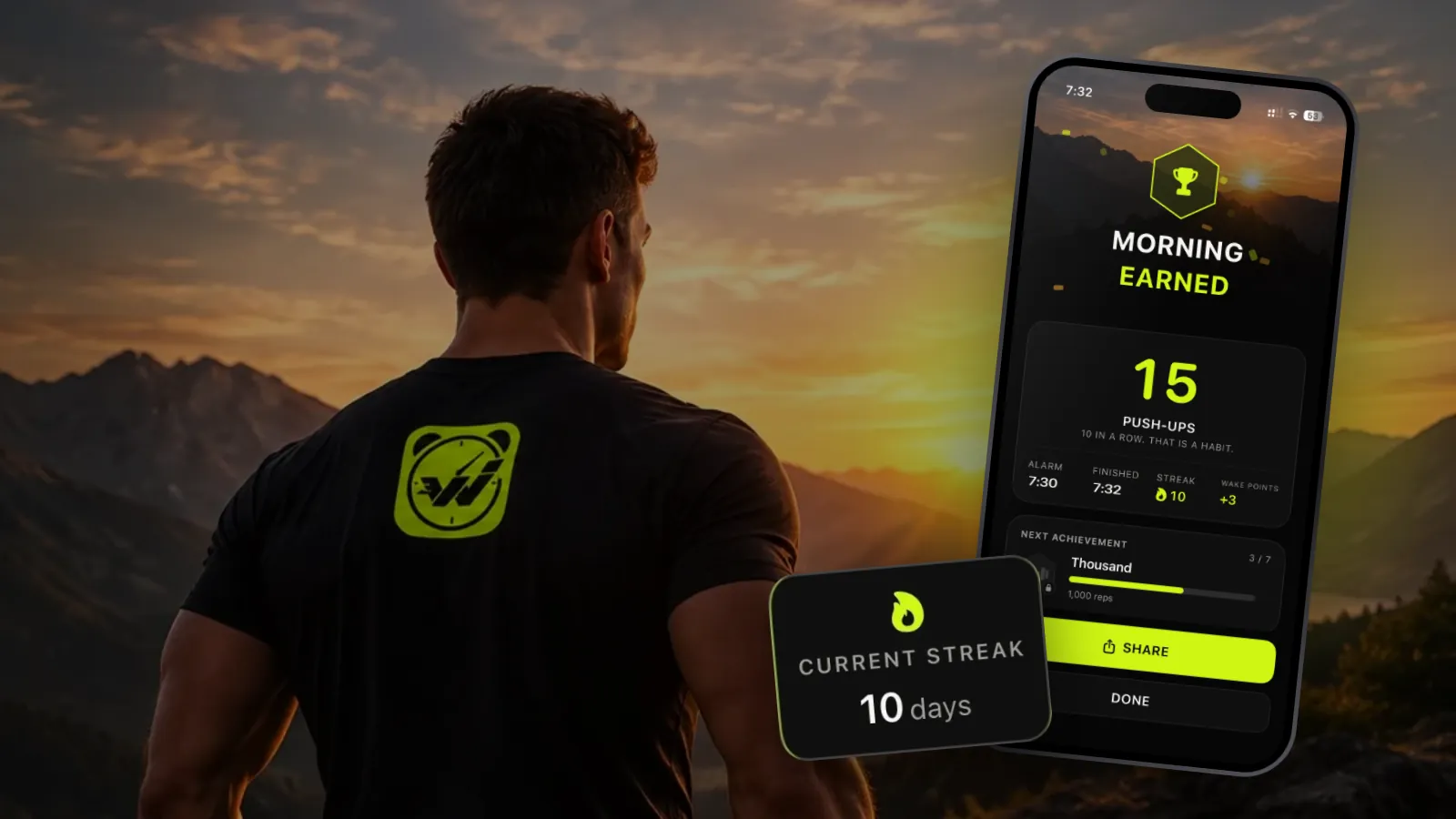
How to get out of bed when your alarm goes off: the first 10 minutes
Nothing makes you sharp the second you wake up, and the research is honest about that. What does help is getting vertical fast. A minute-by-minute plan, with what's evidence and what's just habit.
4 October 2026 · 7 min read
 Guides
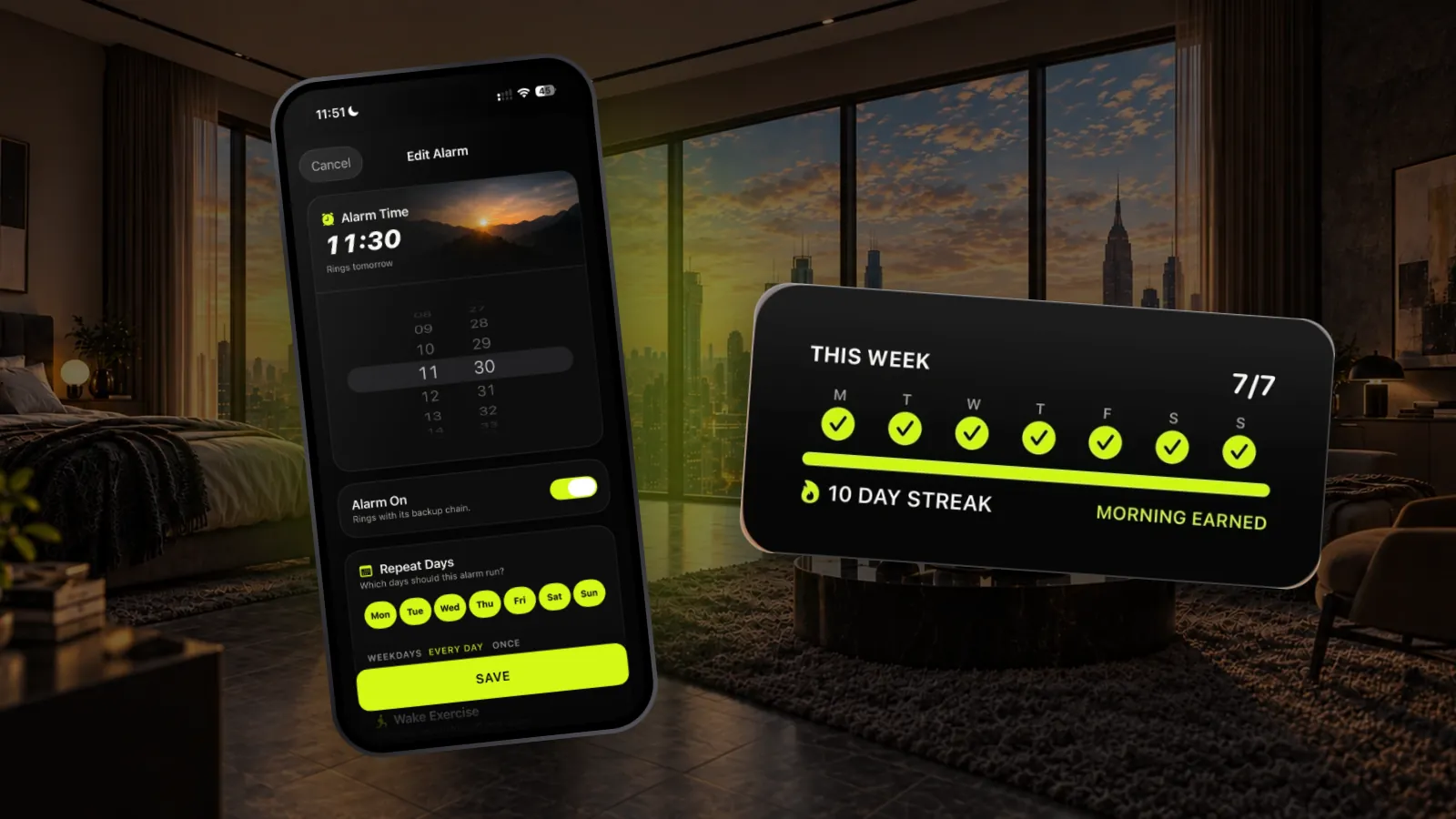
How to stop snoozing your alarm: a 7-day plan
Snoozing itself isn't the enemy. A snooze that never ends is. Here is why the button wins, what helps, and a one-week plan to get up on the first ring.
4 October 2026 · 7 min read
Coming soon to iPhone
Pick one tonight. Do it tomorrow.
Each Wakeletics alarm has its own exercise and its own number. Squats on weekdays and push-ups at the weekend is a perfectly good plan.
Not in the App Store yet. wakeletics.app walks you through the whole app.